Round Rock Office, Q3 2026
Two quarters on from the Q1 snapshot, the split is sharper: small suites and owner-user product move, larger blocks still wait on sublease comps. What that means for renewals coming up in 2027.
The pattern from the Q1 snapshot hasn’t broken. If anything it’s more pronounced: small-footprint demand is doing all the work, and blocks above 15,000 square feet still price against sublease comps rather than direct.
What’s changed since spring is on the ownership side. Owner-user buying has become the more interesting half of this market, and the reason is straightforward — financing costs still keep many investors out of small office, which leaves less competition for business owners who want to buy the building they work in.
A note on figures. This report describes my own active inventory and the inquiries I field, not market aggregates. Where a market-wide statistic would help, I’ve said what to ask for rather than estimate it.
What my own book shows
Office is the deepest category I represent — fourteen active lease listings and seven active sale listings this quarter, more than retail, industrial, and land combined.
The lease inventory clusters at two poles, and there’s very little in between:
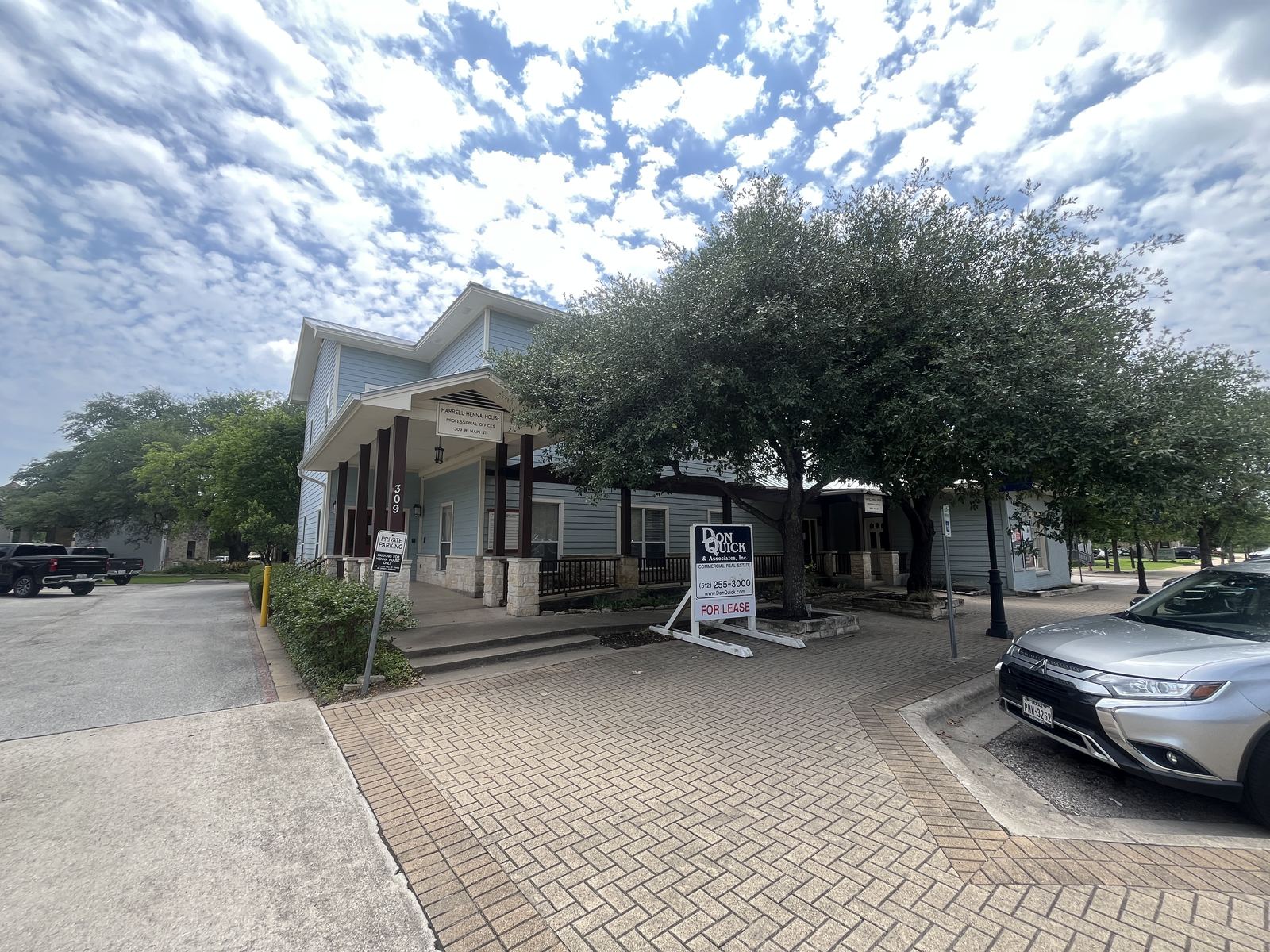
Small suites and monthly gross deals. 1100 Round Rock Ave has 315 SF at $900 per month. Henna House at 309 W Main has 510 to 1,791 SF at $20–24/SF/Year NNN. This end of the market moves.
Larger value blocks. 1608 Royston Ln at $12.50/SF/Year modified gross and 1930 Rawhide Drive at $21.60/SF/Year modified gross. Priced to move volume, and they take longer.
That $12.50 to $24 spread in a single submarket is the story. It isn’t a quality gradient — it’s two different tenant pools who never look at the same building.
The sale side is where the change is
Seven active office sale listings, spanning $300,000 to $2,800,000:
- Round Rock West Park #101-102 — office condos, $300,000 each, 1,672 SF combined. The occupy-one-lease-one structure.
- 600 Round Rock West #303 & #304 — $575,000, 1,716 SF, fully leased. The income-producing version of the same idea.
- Axis Design Building — 106 W Bagdad Ave, $2,300,000 or $28.00/SF/Year NNN. Downtown creative office.
- Henna House — 309 W Main, $2,800,000 or lease, 7,036 SF.
Two of these are dual-listed for sale or lease, and that’s deliberate. When an owner will trade either way, a business currently leasing has a genuine choice to make rather than a take-it-or-leave-it. If you’re a tenant in that position, ask whether the building you’re renting is for sale. The answer is yes more often than tenants assume.
If your lease expires in 2027
Start now. Not in six months.
Renewal leverage comes from having a real alternative, and building one takes time — touring, pricing, and getting far enough into a negotiation elsewhere that your landlord believes you’d move. A tenant who starts ninety days out has no alternative and both sides know it.
What to establish before you begin:
Your private office count. This drives layout more than total square footage, and it’s the number that eliminates buildings fastest.
Your peak simultaneous visitor count. Not your daily total. Parking allocation is where small-suite deals fail, and the tour won’t show you the problem.
Your all-in current cost per square foot, including your share of operating expenses. You cannot compare a $12.50 modified gross quote to a $24 triple net quote until both are converted. The mechanics are in Triple Net (NNN) Lease Explained.
Whether you’d buy instead. For a stable practice in the same submarket for years, the answer is more often yes than people expect. The honest comparison — including what your capital earns inside your business and what an association’s reserve study says — is in Office Condo vs. Leasing.
If you own small office
Well-kept small buildings have regained leverage. Concession-heavy deals are still available in commodity space; they’re not necessary in the good corners. Know which one you own before you negotiate against yourself.
Review 2021 and 2022 leases against current asking rates. That vintage is where the largest gaps sit.
Consider dual-listing for sale and lease if you’d genuinely trade either way. It widens the inquiry pool meaningfully, and an owner-user buyer and a tenant are different people who won’t compete with each other.
If you’re selling, map the buyer before you price. Owner-user value and investor value are different numbers for the same building, and pricing against the wrong comp set is how a listing sits for a year. That’s covered in Owner-User vs. Investor Pricing.
What would sharpen this next quarter
Figures worth requesting from a data provider directly:
- Round Rock office vacancy and net absorption segmented by building size — under 10,000 SF versus above — because the blended number hides the entire story.
- Direct versus sublease asking rate spread in the submarket.
- Owner-user sale volume for office under 10,000 SF, which is the segment with the least published data and the most current activity.
Lease coming up, or weighing a purchase against a renewal? Send me your square footage, your current all-in rent, and how long you’ve been in the space, and I’ll tell you straight which way the math points. Get in touch or see the Round Rock submarket.